
Sarasota Traffic Evolution: Why the Gulf Coast Gridlock Changed and How to Navigate It
Sarasota traffic wasn't always this heavy. Discover the history of local congestion, why it changed, and expert tips for navigating Sarasota and Siesta Key today.
OPINION
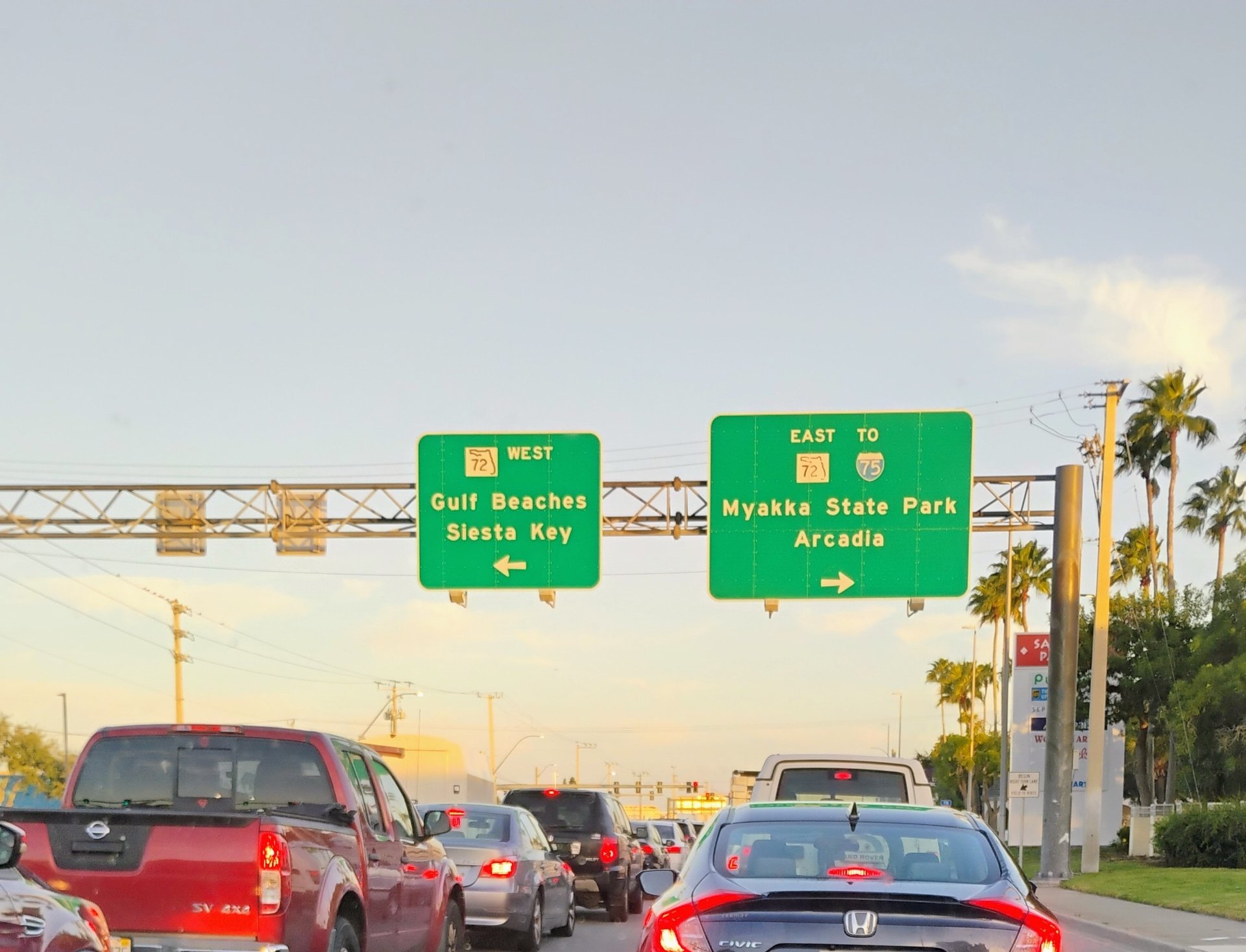
Sarasota’s traffic transformation from a quiet coastal town to a year-round metropolitan crawl is the result of a permanent shift from seasonal tourism to a high-density, full-time resident population.
Key Takeaways
Seasonal shift: Traffic is no longer just a "winter" problem; it is now a year-round reality.
Infrastructure lag: Road expansions haven't kept pace with the 20% population surge in the last decade.
Bridge bottlenecks: Access points to Siesta Key and Longboat Key remain the primary "choke points."
Strategic timing: Avoiding the 4:00 PM – 6:00 PM window is essential for cross-town travel.
Why has Sarasota traffic changed so much in recent years?
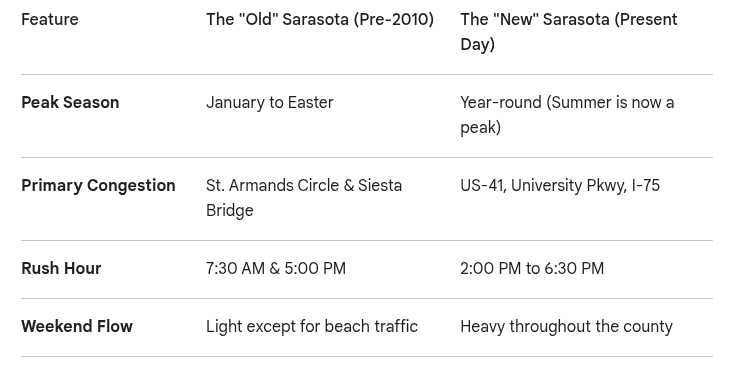
Sarasota traffic has evolved from a predictable seasonal cycle to a permanent state of congestion due to massive population growth, the rise of remote work, and a shift in tourism patterns. What used to be a "snowbird" phenomenon is now driven by full-time residents and year-round visitors clogging primary arteries like US-41 and I-75.
In my experience living and working on the Gulf Coast for decades, the biggest shift occurred when the "off-season" effectively disappeared. We used to look forward to May because the roads would clear out, but that breathing room has evaporated.
The data supports this: Sarasota County has seen a significant influx of residents who aren't just here for the winter. This means the infrastructure designed for a 1990s population is now struggling to support a 2026 reality.
Traffic Comparison: Then vs. Now
What are the main causes of the current gridlock?
The current gridlock is caused by a "perfect storm" of rapid residential development, a lack of alternative east-west corridors, and the geographical constraints of being a coastal community. Because Sarasota is bound by the Gulf, traffic is funneled through a few major bridges and North-South highways that cannot easily be expanded.
What I found when I tested different routes across town is that "shortcuts" through neighborhoods like Gulf Gate or Southside Village are increasingly being discovered by GPS apps. This pushes highway-level traffic into quiet residential streets.
Over-development: High-density condos and housing tracts have outpaced road widening projects.
The "Bridge Effect": Only two bridges serve Siesta Key, creating a natural funnel that backs up for miles.
Technology: Apps like Waze have distributed traffic more evenly across local roads, meaning there are no more "secret" routes.
My Perspective: A Local’s View on the "New Normal"
In my experience, the hardest thing for long-term residents to accept is that the "old Sarasota" isn't coming back. I’ve spent more than 50 years watching the landscape change, and the traffic isn't just a nuisance—it’s a change in our lifestyle.
When I’m managing local projects or even just heading to the beach, I’ve had to adopt a "buffer hour" mentality. If you aren't across the bridge by 10:00 AM, you might as well stay home until 3:00 PM. My nuanced take is that while the traffic is frustrating, it’s also a sign of the area's economic vitality. We have better amenities and services than we did 20 years ago, but the "tax" we pay for those amenities is the time spent behind the wheel.
How can you avoid the worst of Sarasota traffic?
To avoid the worst Sarasota traffic, travelers should utilize the "mid-day window" between 10:30 AM and 1:30 PM, use the Legacy Trail for short-distance bike travel, and rely on local trolleys for beach access. Planning trips around bridge opening schedules and avoiding US-41 during school drop-off/pick-up times is also critical.
Use the Bay Runner: The free trolley from downtown to Lido Key is a lifesaver for avoiding parking headaches.
Time the Bridges: Avoid the Stickney Point bridge at the top and bottom of the hour when boat traffic is high.
Go East-West Early: If you need to get from I-75 to the water, do it before 9:00 AM.
FAQ: Frequently Asked Questions
Is Sarasota traffic worse than Tampa or Miami? While Sarasota has less total volume than Miami, the "perceived" traffic is often worse because our infrastructure lacks the massive multi-lane expressways found in larger cities.
When is the best time to drive to Siesta Key? In my experience, arriving before 9:00 AM is the only way to guarantee a parking spot and avoid a 45-minute crawl down Midnight Pass Road.
Will the new roundabouts help traffic flow? The roundabouts on US-41 have improved "flow" by removing long red lights, but they don't reduce the actual volume of cars. They make the crawl more consistent rather than a series of stop-and-go events.
Affiliate Disclaimer: Our website participates in affiliate programs, which means we may earn commissions on purchases made through our links to retailer sites. This comes at no extra cost to you and helps us keep our site running.
Website developed by: